
'Frankly, I'm in that zone for another Olympics.'

Israel wishes to continue its bombing campaign until Iran's military and industrial infrastructure are degraded to a point where it ceases to pose a threat to Israel. Iran, for its part, has learnt from its experience in the 12-day war of last June. Any ceasefire, it believes, will only be a prelude to another attack on itself. It is determined to convey that any attack on Iran will impose heavy costs on Israel, the US, America's allies in the Gulf -- and on the world at large, points out T T Ram Mohan.

Economist Jeffrey Sachs saw Gulf nations' decision to partner with the US through the Abraham Accords as an "invitation for disaster" as it made them more dependent on American protection.

US President Donald Trump is considering ending the military operation against Iran even if the Strait of Hormuz remains closed, according to the Wall Street Journal.

The UN Security Council, with India's support, has adopted a resolution condemning Iran's attacks on Gulf Cooperation Council countries and Jordan, demanding an immediate cessation of hostilities and denouncing threats to the Strait of Hormuz.

US President Donald Trump announced the 'reinstatement' of an 'Iranian Blockade' in the Strait of Hormuz, stating the US would charge a 20 per cent levy on transiting cargo for providing security, while Iran warned against any US interference, reaffirming its authority over the critical waterway.

Amid escalating tensions, Iranian Deputy Foreign Minister Saeed Khatibzadeh declares Iran's unwavering commitment to a 'heroic nationalist defence' against perceived American and Israeli aggression, vowing to resist what he calls an 'invasion' to the very end.

An oil tanker carrying Saudi crude safely reached Mumbai after crossing the war-hit Strait of Hormuz with its tracking system briefly switched off.

Karex, the Malaysian company that makes roughly one in five of the world's condoms -- about five billion a year, supplying Durex and Trojan among others -- announced this week that it is raising prices by up to 30 percent. The reason is the Strait of Hormuz.

'What we have yet to see on either the US or the Iranian side is willingness to compromise on their ultimate demands and the flexibility to reach an agreement to end the war.

Nobody takes Pakistan seriously and therefore Pakistan's sudden mediating with almost immediate results of a ceasefire seems more contrived than real, points out Vice Admiral Biswajit Dasgupta (retd).

Prime Minister Narendra Modi has highlighted the risks posed by the 'weaponisation' of resources and strategic sea routes, urging India to achieve greater self-reliance in energy to mitigate vulnerabilities to overseas supplies and geopolitical tensions.
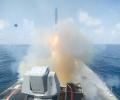
'India was not obliged to protect the Iranian ship.' 'Once the Iranian ship left Indian waters, she was on her own.' 'Guilt tripping India is wrong.'

Former US President Donald Trump has issued a stern warning to Iran, stating that "nothing will get through" unless a deal or "total surrender" is achieved, amid escalating tensions and conflicting reports on direct negotiations.

A proposed deal between Iran and Oman could grant Tehran control over vessels entering the Gulf through the Strait of Hormuz, according to a senior Iranian source and two regional officials who spoke to Reuters on Wednesday, in what represents one of the most significant concessions made to Iran to date.

The International Cricket Council confirmed that stranded players from the South Africa national cricket team and West Indies cricket team have finally left India after Gulf airspace closures during the West Asia conflict disrupted travel following the ICC Men's T20 World Cup.

Tensions in West Asia have dramatically escalated as Israel launched targeted military operations against Iran, triggering widespread blasts across strategic cities, following earlier Iranian projectile attacks on Israel.

If the oil infrastructure is attacked by the United States, the whole area could be flooded with oil, spilling into the Persian Gulf.
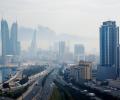
The modern war is about quality over quantity, points out Mihir S Sharma.

An Indian-flagged crude tanker safely departed from the UAE's Fujairah after loading oil, despite an attack on the oil terminal. The Indian government is closely monitoring the situation in West Asia to ensure stable fuel supplies and maritime safety.

Governor: Simplistic narrative, questionable historical accuracy, underwhelming production quality, notes Sukanya Verma.
Following through announcements with enforcement of measures is key, as a run through recent Indian economic history shows, points out A K Bhattacharya.

When everyone has footage and no one can verify it, the loudest voice wins, notes Prem Panicker who begins a daily blog on the War in the Middle East.

The Reserve Bank of India (RBI) Governor Sanjay Malhotra is now confronting the classic growth-inflation tradeoff, a situation exacerbated by the West Asia war, which threatens to end the 'goldilocks period' of low inflation and robust growth.
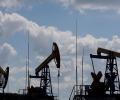
Global energy markets saw a significant correction as oil prices nosedived following Iran's announcement that the Strait of Hormuz has been fully reopened, dismantling the 'war-risk' premium that had gripped the market.

Iran has reportedly allowed select "friendly nations" including India and Pakistan limited access to the Strait of Hormuz amid ongoing conflict, easing some energy supply concerns. Here's what the move means for global trade and oil routes.

Amid the ongoing conflict in West Asia, Israeli Ambassador to India, Reuven Azar, stated that Israel is willing to cease hostilities if Iran changes its course, emphasising that Tel Aviv has consulted diplomatic channels, including the US and regional partners.

India significantly increased its crude oil imports from Russia and the United Arab Emirates in June, securing supplies as the Strait of Hormuz began to reopen, with Russian barrels remaining attractive due to discounts and UAE supplies offsetting earlier uncertainties.
Crude oil futures surged over 3 per cent, snapping a three-session losing streak, as renewed military escalation in West Asia revived fears of supply disruptions, driving prices higher on both domestic and international exchanges.

Congress leader Shashi Tharoor is urging the Indian government to take a more proactive role in mediating the escalating conflict between the US-Israel alliance and Iran, emphasising the impact on India's energy security and regional stability.

'The entire US ecosystem built over decades at the bases in the Gulf region, especially the UAE, costing trillions of dollars have been decimated, dealing a mortal blow to the US Central Command's war capability,' points out Ambassador M K Bhadrakumar.

Iranian Foreign Minister Abbas Araghchi has revealed the intense psychological pressure faced by Tehran's diplomatic delegation during peace negotiations with the United States, recalling a direct exchange with US President Donald Trump's Middle East envoy, Steve Witkoff, where he questioned the envoy about the constant military threats.

US President Donald Trump has announced the cancellation of a planned attack on Iran, contingent on Tehran agreeing to rapidly open the Strait of Hormuz and end its nuclear programme. This decision follows appeals from Middle Eastern countries and includes Israel's commitment, though Iran had previously warned against any "adventurous action" from the US.

The reopening of the Strait of Hormuz, following a ceasefire agreement between the US and Iran, is expected to significantly ease India's crude oil supply risks, lower freight costs, and reduce inflationary pressures, as global oil prices have already dropped.

The big question is whether Trump is any longer in command of the situation. For all practical purposes, the war seems set to cascade as the US is preparing for a potential ground operation in Iran and threatens to destroy 'bridges next, then electric power plants', points out Ambassador M K Bhadrakumar.

What we are watching is something different: A fog manufactured and maintained by the people who started the war, so that the question of why it was started never has to be answered, observes Prem Panicker in his must read blog on the war in the Middle East.

Indian investors have seen their wealth erode by a staggering Rs 48.29 lakh crore since the West Asia war began on February 28, leading to a significant downturn in the BSE Sensex and NSE Nifty, driven by geopolitical tensions and rising crude oil prices.

US President Donald Trump stated the war with Iran would end 'soon,' citing significant military gains and minimal remaining targets. This contradicts earlier administration statements about an open-ended timeline.
The logic of war plus the gathering storms in US politics as the midterms loom large leave him with no real alternative but to negotiate, points out Ambassador M K Bhadrakumar.

Revenue collection next financial year may be affected, and, along with this, subsidies on food and fertilisers can go up if the war in West Asia drags for long, according to experts.
